

🎯 What Is Competency-Based Education? (And Why It Matters for Malawian Students)
For decades, the traditional education system has focused on one main goal: passing the final exam. Students spend hours memorizing facts, formulas, and definitions, only to forget them shortly after the test is over.
But the world is changing, and so is education. Across Malawi and the rest of Africa, there is a major shift toward Competency-Based Education (CBE).
If you are a student, parent, or teacher, you have likely heard this term. But what does it actually mean, and how does it change the way we learn?
📚 What Exactly Is Competency-Based Education?
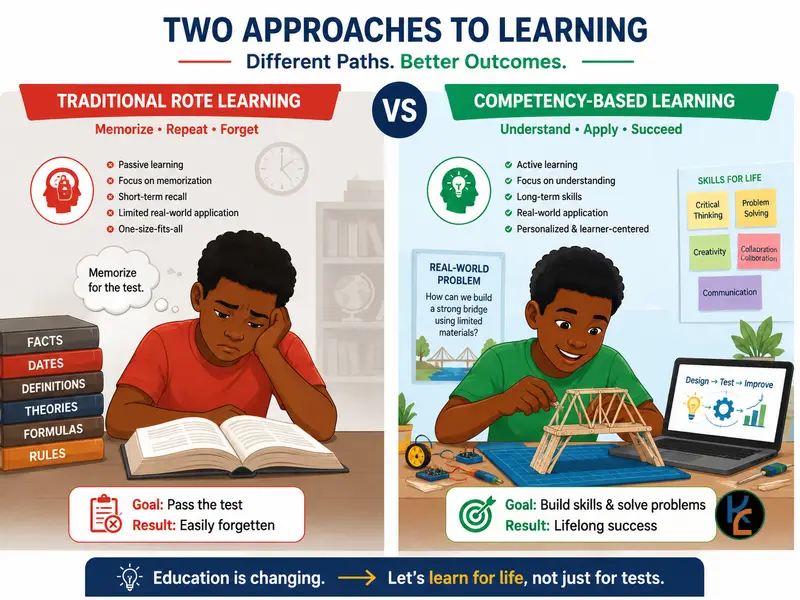
Competency-Based Education (CBE) is a learning approach that focuses on a student’s ability to demonstrate mastery of a specific skill or knowledge area, rather than just the amount of time they spend sitting in a classroom.
In simple terms:
- Traditional Education asks: "Did the student spend the required time in class and pass the test?"
- Competency-Based Education asks: "Can the student actually do something with this knowledge in the real world?"
Instead of just memorizing the definition of photosynthesis, a student in a CBE system might be asked to design a small experiment to show how plants grow under different light conditions. The focus shifts from remembering to applying.
⚖️ Traditional Learning vs. Competency-Based Learning
To understand the difference clearly, let’s look at a direct comparison:
| Feature | Traditional Education | Competency-Based Education |
|---|---|---|
| Focus | Memorizing facts and passing exams | Mastering practical skills and understanding |
| Assessment | One major final exam | Continuous projects, presentations, and practical tests |
| Pace | Everyone moves at the same speed | Students progress when they master the topic |
| Role of Student | Passive listener | Active participant and problem solver |
🌍 Why Is This Important for Malawian Students?
Malawi’s education sector is actively working to align with 21st-century skills. The new curriculum frameworks emphasize critical thinking, creativity, communication, and collaboration.
Here is why CBE is a game-changer for learners in Malawi:
- Better Employability: Employers don’t just want people who can recite textbook definitions. They want people who can solve problems, use technology, and think critically. CBE builds these exact skills.
- Reduces Exam Anxiety: Because assessment is continuous and varied (projects, oral presentations, practicals), the pressure of a single "do-or-die" final exam is reduced.
- Makes Learning Relevant: Instead of abstract theories, students learn how to apply knowledge to local challenges, such as agriculture, environmental conservation, or community health.
- Supports Different Learning Styles: Not every student learns best by reading. CBE allows students to demonstrate their knowledge through building, speaking, drawing, or experimenting.
💡 How Students Can Thrive in a Competency-Based System
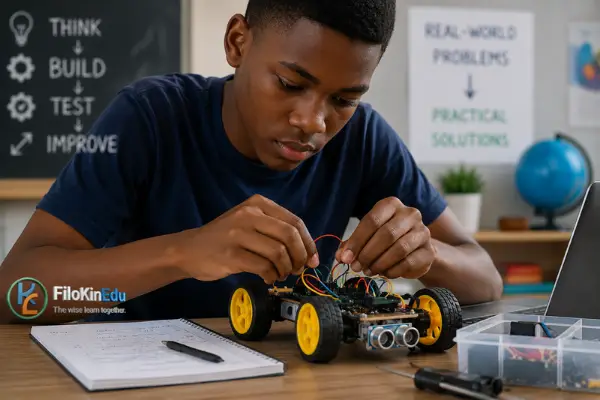
If your school is adopting CBE principles, or if you want to study more effectively on your own, here are practical tips to succeed:
1. Focus on "Why" and "How", Not Just "What"
Don’t just memorize that water boils at 100°C. Ask yourself why it boils and how altitude affects it. Understanding the concept makes it impossible to forget.
2. Apply What You Learn to Real Life
Learning about percentages in Mathematics? Calculate the discount on items at the local market. Learning about biology? Observe the plants in your garden. Connecting school to reality builds true competency.
3. Embrace Projects and Group Work
Don’t shy away from group assignments or practical projects. These are opportunities to develop communication, leadership, and problem-solving skills that exams cannot measure.
4. Ask for Feedback, Not Just Grades
Instead of only asking your teacher, "What mark did I get?", ask, "What can I improve on to master this topic?" Feedback is the fuel for competency.
👨👩👧 How Parents Can Support Competency-Based Learning
Parents play a crucial role in shifting the mindset from "grades only" to "skills and understanding."
- Praise effort and understanding: Instead of only celebrating an "A", celebrate when your child explains a difficult concept to you in their own words.
- Encourage curiosity: When your child asks "why?", explore the answer together rather than dismissing it.
- Provide practical materials: Support their projects with basic materials, even if it’s just cardboard, glue, or access to a smartphone for research.
- Focus on progress: Recognize that mastering a skill takes time. Be patient and encourage continuous improvement.
🚀 The Bottom Line
Competency-Based Education is not about making school harder. It is about making learning meaningful.
It prepares students not just to pass an exam, but to navigate life, innovate, and contribute positively to their communities.
The future belongs to those who can apply knowledge, not just those who can recall it. By embracing competency-based learning, Malawian students are positioning themselves for success in a rapidly changing world.
📚 Master Your Skills With FiloKin Edu
Transitioning to a competency-based approach requires the right resources. You need materials that explain concepts clearly and provide practical ways to test your understanding.
Access Free, High-Quality Study Resources
FiloKin Edu provides free past papers, revision guides, and study notes designed to help you truly understand your subjects, not just memorize them.
✅ 100% Free • JCE & MSCE Aligned • Downloadable PDFs
Start focusing on mastery today, and watch your confidence and results grow!


Sign in securely with Google to join the discussion.