
How Technology Is Transforming Education in Africa (2026 Report)
Remember when "educational technology" in African schools meant a dusty overhead projector and a broken radio? Those days are ending faster than you think.
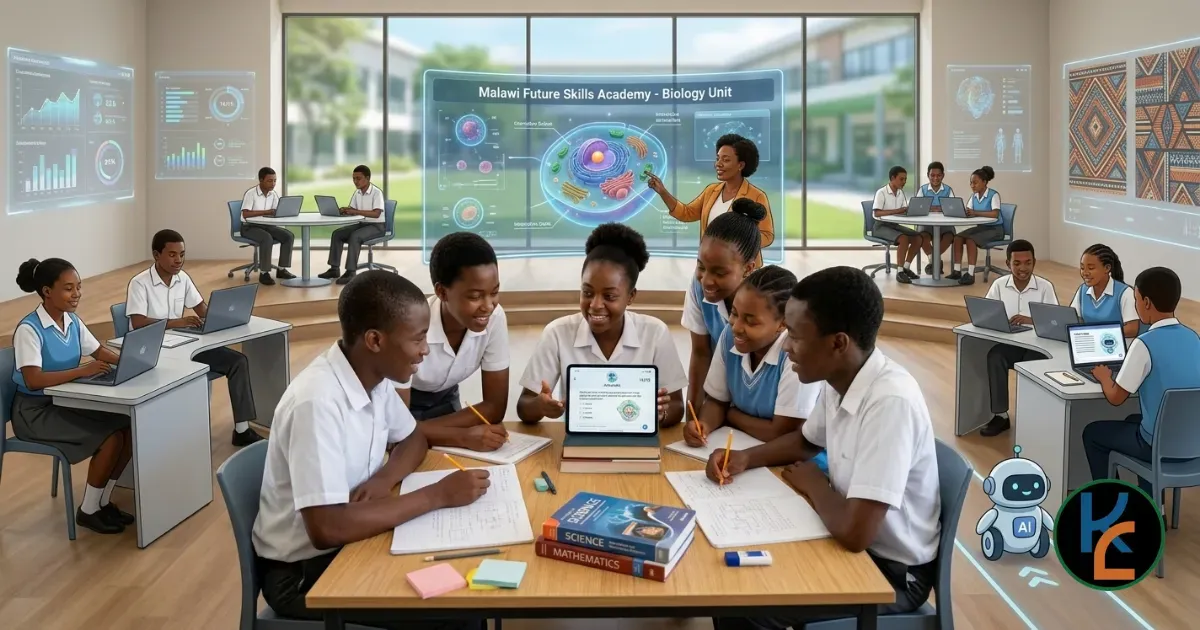
In 2026, a student in rural Malawi can attend a live lecture from a professor in Nairobi. A teacher in a village with no electricity can download an entire semester's worth of lessons on a smartphone. And AI tutors are helping students master concepts at their own pace.
This isn't science fiction. This is happening right now.
The Mobile Revolution: Learning in Your Pocket
Why Smartphones Are Game-Changers
Africa has the fastest-growing mobile phone adoption rate in the world. While laptop ownership remains low (less than 10% in many countries), smartphone penetration has exceeded 50% in most African nations.
What this means: Education is no longer confined to physical classrooms. Learning happens on buses, in markets, at home—anywhere there's a signal.
Real Examples:
- Eneza Education (Kenya): Provides SMS-based lessons to students without smartphones
- Ubongo (Tanzania): Educational cartoons broadcast on TV and mobile
- FiloKin Edu (Malawi): Free PDF resources and learning hub accessible on any smartphone
🌐 Internet Access: Breaking Down Barriers
The Numbers Tell the Story
- 📈 Internet users in Africa grew from 16% in 2015 to 43% in 2026
- 💰 Mobile data costs dropped by 60% in the last 5 years
- 📡 4G coverage now reaches 80% of urban areas
- 🛰️ Starlink and other satellite internet bringing connectivity to remote areas
What's Changed:
- Before: Students traveled to cyber cafés to access online resources
- Now: Students download materials on their phones and study offline
🤖 AI and Personalized Learning
One Size No Longer Fits All
Traditional classrooms teach to the "average" student. But what if you're not average? What if you learn faster? Or slower?
AI-powered platforms are solving this:
- Adaptive learning: The system adjusts difficulty based on your performance
- Instant feedback: Get corrections immediately, not days later
- 24/7 availability: Study at 2 AM if that's when you're most focused
African AI Innovations:
- EdTech startups developing AI tutors that understand local languages (Chichewa, Swahili, Yoruba)
- Automated grading systems helping teachers manage large classes
- Chatbots answering student questions when teachers aren't available
Digital Libraries and Open Educational Resources (OER)
The End of "No Textbooks"
For decades, African students faced a simple problem: no books. Textbooks were expensive, outdated, or simply unavailable.
Technology is fixing this:
Free Digital Resources Available Now:
- FiloKin Edu: Free past papers, study guides, revision notes
- African Storybook: Thousands of children's books in African languages
- OpenStax: Free university-level textbooks
- Khan Academy: Free lessons in math, science, and more
- UNESCO OER: Open educational resources for all levels
The impact: A student with a smartphone now has access to more educational content than a university library had 20 years ago.
🎓 Online and Blended Learning
University Without Borders
You no longer need to move to Blantyre or Lilongwe to get a quality education.
What's available:
- University of Malawi Online: Distance learning programs
- African Virtual University: Courses from institutions across the continent
- Coursera & edX: Courses from Harvard, MIT, and other top universities (many free to audit)
Blended Learning Model:
The future isn't fully online or fully offline—it's both:
- Attend physical classes for discussions and labs
- Watch recorded lectures at home
- Submit assignments online
- Participate in virtual study groups
👨 Teacher Support and Professional Development
Empowering Educators
Technology isn't just helping students—it's supporting teachers too.
How:
- Online training programs: Teachers upskill without leaving their schools
- Digital lesson plans: Share best practices across districts
- Automated administrative tasks: Spend less time on paperwork, more time teaching
- Teacher communities: WhatsApp and Telegram groups for peer support
⚡ Challenges That Remain
Let's be honest—technology isn't a magic wand. Real challenges persist:
The Reality Check:
- Digital divide: Rural areas still lag behind cities
- Electricity: Load-shedding disrupts online learning
- Data costs: Still expensive for many families
- Digital literacy: Some teachers and parents struggle with technology
- Quality control: Not all online resources are accurate or curriculum-aligned
- Infrastructure: Schools need computers, projectors, and reliable internet
🚀 What's Coming Next (2026-2030)
Emerging Trends to Watch:
- Offline-first AI: AI tutors that work without internet
- Virtual Reality (VR) labs: Science experiments in virtual environments
- Blockchain credentials: Tamper-proof digital certificates
- 5G rollout: Faster, more reliable connectivity
- Local language AI: Tutors that teach in Chichewa, Swahili, and other African languages
- Solar-powered learning hubs: Community centers with offline digital libraries
What This Means for YOU
Whether you're a student, teacher, or parent, here's how to adapt:
For Students:
- Embrace digital tools—they're your competitive advantage
- Learn to study independently using online resources
- Develop digital literacy skills (typing, research, online communication)
- Use technology to supplement, not replace, traditional learning
For Teachers:
- Integrate technology gradually—start small
- Use free platforms like Google Classroom or WhatsApp for assignments
- Share digital resources with students
- Keep learning—take online professional development courses
For Parents:
- Support your child's digital learning journey
- Help them find legitimate educational resources
- Set boundaries on screen time (balance is key)
- Stay informed about educational technology trends
Final Thoughts
Technology is not replacing teachers. It's empowering them.
Technology is not replacing classrooms. It's expanding them.
Technology is not replacing hard work. It's making it more effective.
The transformation of education in Africa is not a distant future—it's happening now. The question is: Will you be part of it?
Start small. Download one educational app. Watch one tutorial video. Join one online study group. Before you know it, you'll be part of Africa's educational revolution.
📚 Be Part of the Digital Learning Revolution
At FiloKin Edu, we're committed to making quality education accessible to every African student through technology.
🎓 Join Our Learning Hub
Access structured online courses, video lessons, and interactive learning materials designed for African students.
📥 Free Digital Resources
Download free past papers, study guides, and revision notes—optimized for mobile learning.
FiloKin Edu — The wise learn together.


Sign in securely with Google to join the discussion.