

📚 Malawi’s New School Curriculum Explained: What’s Changing & What It Means for You
Malawi’s education system is about to undergo its biggest transformation in decades. The newly released Curriculum and Assessment Framework for Schools and Colleges (July 2025) introduces a completely new structure, teaching approach, and assessment model designed to prepare learners for the 21st century.
Whether you're a student preparing for MSCE, a parent planning your child's education, or a teacher getting ready for classroom changes, this guide breaks down exactly what's new, why it matters, and how to prepare.
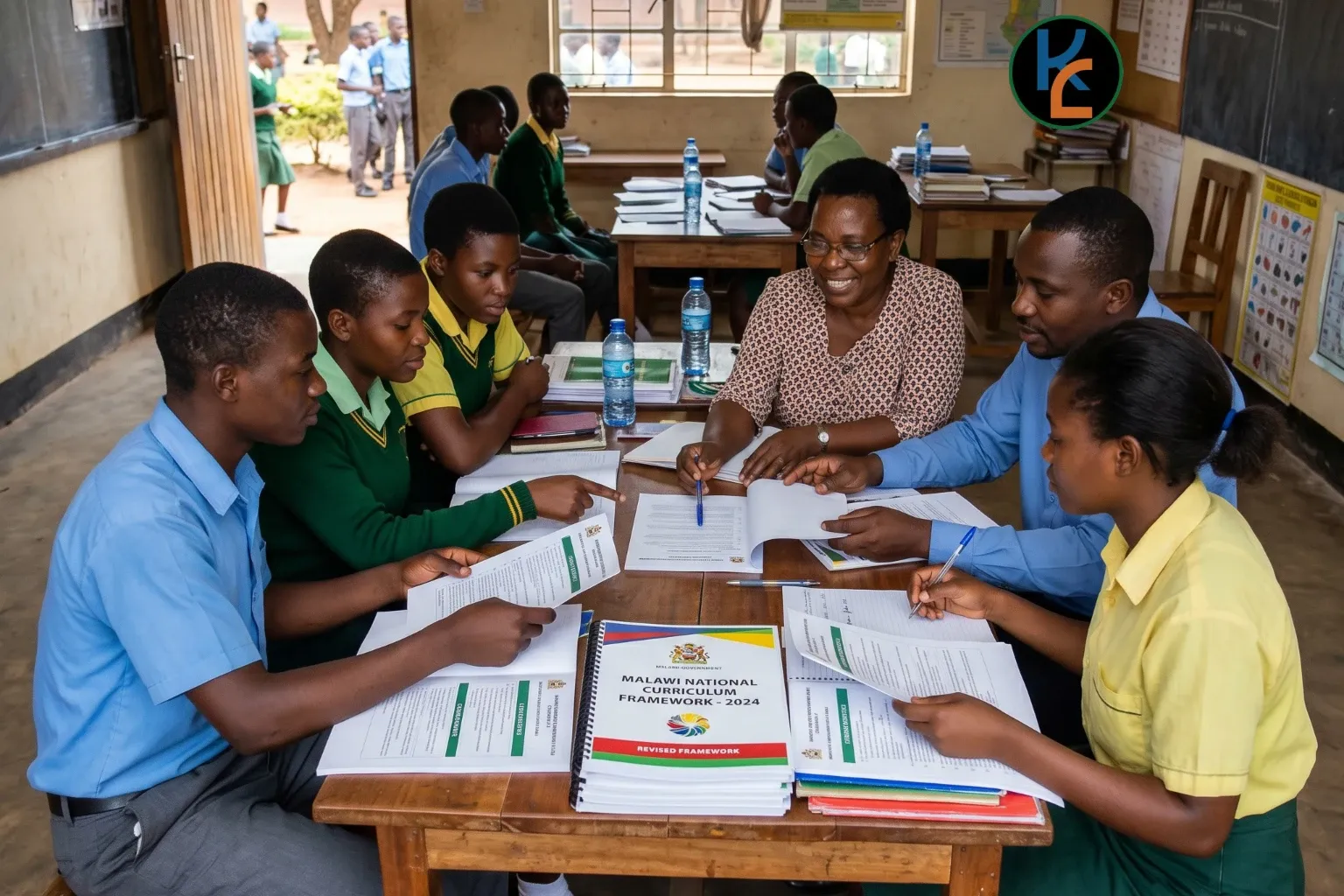
A new curriculum. A new direction. A new Malawi.
🏗️ The Big Shift: From 8-4-4 to 1-6-6-3
The most visible change is the restructuring of Malawi's education system. The old 8-4-4 model is being replaced with a 1-6-6-3 structure that aligns with Malawi 2063 and global best practices:
- 1 Year: Preparatory Class (P-Class for 5-year-olds)
- 6 Years Primary: Lower Primary (Grades 1–3) + Upper Primary (Grades 4–6). PSLCE taken at Grade 6.
- 6 Years Secondary: Lower Secondary (Forms 1–2), Upper Secondary (Forms 3–4), Advanced Level (Forms 5–6)
- 3 Years Tertiary: University, colleges, or TEVET pathways
Why this matters: Learners get more time at each stage, reducing the rush that often leads to weak foundations. Basic education now officially covers Pre-Primary to Form 4.
🧠 Competency-Based Learning: What It Actually Means
The curriculum shifts from memorising facts to demonstrating skills. Instead of asking "What do you know?", the new system asks: "What can you do with what you know?"
8 Core Competencies all learners will develop:
- Communication & Collaboration
- Digital & Technological Literacy
- Creativity & Innovation
- Critical Thinking & Problem Solving
- Responsible Citizenship
- Wealth Creation & Entrepreneurship
- Learning to Learn (Meta-Learning)
- Adaptability & Resilience
In practice: More projects, experiments, group work, real-life problem solving, and less rote learning. Exams will test application, not just recall.
🛤️ Secondary School Pathways: Choosing Your Future Early
From Form 3 onwards, learners will choose one of four pathways based on their interests, strengths, and career goals:
| Pathway | Focus | Career Examples |
|---|---|---|
| STEM | Physics, Chemistry, Biology, Advanced Math, Computer Science | Engineers, Doctors, Data Scientists, Tech Innovators |
| Arts & Sports Science | Creative Arts, Music, Drama, Physical Education, Media Tech | Athletes, Artists, Coaches, Media Professionals |
| Social Sciences & Humanities | History, Geography, Economics, Literature, Languages, Civics | Lawyers, Teachers, Journalists, Economists, Policy Makers |
| TEVET | Carpentry, Electrical, Agriculture, Fashion, Plumbing, ICT | Artisans, Entrepreneurs, Technicians, Farm Managers |
Key takeaway: No pathway is "inferior." TEVET and Arts now carry the same academic weight as STEM. Learners can exit at Form 4 or continue to Advanced Level (Form 5–6).
📊 Updated Assessment: Less Rote, More Real-World Application
Gone are the days when one final exam determined your entire future. The new framework introduces competency-based assessment:
- Secondary School: 60% Continuous/Formative Assessment + 40% Summative Exams
- Primary School: Heavy focus on formative assessment in Grades 1–2, with national learning assessments at Grade 3 and PSLCE at Grade 6
- Multiple assessment methods: Portfolios, projects, presentations, practical tests, peer reviews, and traditional exams
- Remediation built-in: Learners must master foundational skills before moving to new concepts
This means teachers will track progress term-by-term, not just at exam time. Students who struggle in one area get targeted support before falling behind.
👥 What This Means for You
🎓 For Students
- Start developing digital literacy, problem-solving, and communication skills now
- Explore different subjects in Forms 1–2 to help choose your Form 3 pathway
- Focus on understanding, not just memorising. Past papers will still help, but application matters more
👨👩👧👦 For Parents
- Encourage curiosity, reading, and practical projects at home
- Support pathway choices based on your child's strengths, not societal pressure
- Stay updated: MANEB and MoBSE will release detailed implementation guidelines soon
👩🏫 For Teachers
- Begin shifting to learner-centred, project-based teaching
- Master formative assessment tools (checklists, rubrics, portfolios)
- CPD will be mandatory — expect training on CBC delivery, digital tools, and inclusive education
📅 When Will It Roll Out?
The framework was officially released in July 2025. Implementation will be phased over the coming years, starting with:
- Teacher training & curriculum material development
- Pilot schools in selected divisions
- Gradual national rollout, beginning with lower grades and moving upward
Current students will not be forced to switch mid-stream. The transition will respect your current examination cycle while preparing the next generation for the new system.
📂 Free Resources to Stay Ahead
While the curriculum evolves, foundational knowledge remains essential. Use our free resources to build strong study habits now:
📘 Mathematics Past Papers — Essential for STEM & problem-solving
📗 English Revision Guides — Communication & comprehension skills
📁 Browse All Secondary Resources — 250+ free past papers, notes, pamphlets
🎯 Your Next Step
Change can feel overwhelming, but it's also an opportunity. Start preparing today by:
- Understanding which pathway aligns with your strengths
- Practising application-based questions (not just recall)
- Building digital literacy and critical thinking habits
- Staying informed through official MoBSE & MANEB announcements
This curriculum isn't just about passing exams. It's about preparing Malawian learners to thrive in a rapidly changing world.
📥 Free Resources to Prepare for the Future
Past papers, revision notes, and study planners to keep you ahead.
Access Free MSCE Resources
✅ 100% free • No signup required • Works offline
Written for every Malawian student, parent, and teacher ready to embrace the future of education.
— Kizito Chikuni, Educator & Developer
Sign in securely with Google to join the discussion.