

📊 How to Read a MANEB Report Card: Understanding Grades, Credits, and What They Mean
You've been waiting for months. The results are finally here. You open the envelope, stare at the numbers... and suddenly realize you have no idea what they actually mean.
Grade 3 in Biology — is that good? What's the difference between a credit and a pass? And why does everyone keep talking about "getting a 6"? This guide breaks down everything you need to know about reading and understanding your MANEB MSCE results.
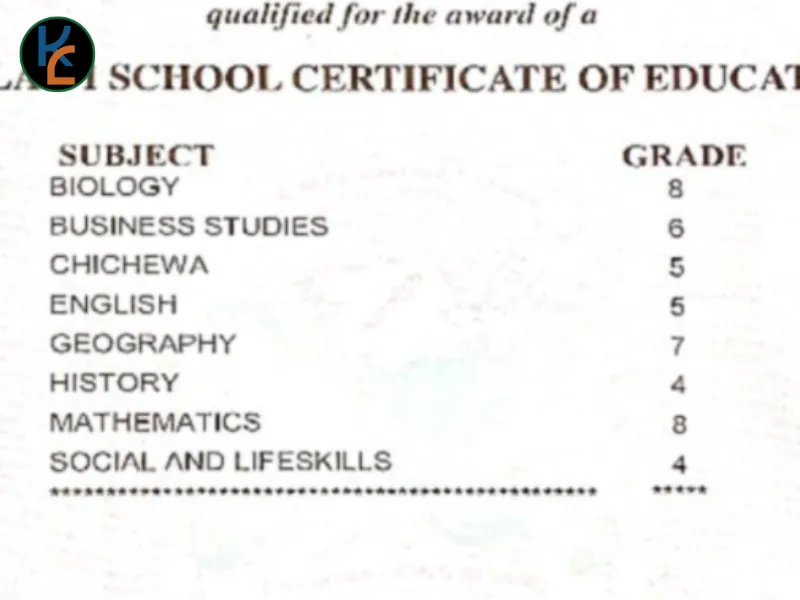
Your results tell a story. Here's how to read it.
The MSCE Grade Scale: What Numbers 1-9 Really Mean
MANEB uses a 9-point grading scale for MSCE. Lower numbers are better — this isn't golf, but the principle is similar.
Here's the complete breakdown:
Distinction Grades (Elite Performance)
- Grade 1: 80-100% — Outstanding mastery. You didn't just pass; you excelled.
- Grade 2: 70-79% — Excellent performance. Strong understanding with minimal errors.
Credit Grades (Solid Performance)
- Grade 3: 65-69% — Good command of the subject. Above average.
- Grade 4: 60-64% — Competent performance. You understand the material well.
- Grade 5: 55-59% — Satisfactory. You've met the requirements comfortably.
- Grade 6: 50-54% — Minimum credit. You've crossed the credit threshold.
Pass Grades (Minimum Requirements)
- Grade 7: 45-49% — Basic pass. You've met the minimum standard.
- Grade 8: 40-44% — Barely passing. You scraped through.
Fail Grade
- Grade 9: 0-39% — Failed. The subject was not passed.
💎 Credit vs. Pass: The Difference That Changes Everything
This is where most students and parents get confused. Here's the critical distinction:
Credits (Grades 1-6)
These count toward university admission. When universities say "6 credits required," they mean grades 1 through 6 in six different subjects.
Why credits matter:
- ✅ Required for university entry (minimum 6 credits)
- ✅ Show you have solid understanding of the subject
- ✅ Competitive programs often require credits in specific subjects
Passes (Grades 7-8)
These do NOT count for university admission. You passed the subject and earned your MSCE certificate, but universities don't count grades 7-8 toward their requirements.
What passes mean:
- ✅ You've completed secondary school successfully
- ✅ You can apply for jobs requiring MSCE completion
- ❌ You cannot use them for university admission
Real Example:
Student A's Results:
English: Grade 4 (Credit) ✅
Mathematics: Grade 5 (Credit) ✅
Biology: Grade 6 (Credit) ✅
Chemistry: Grade 7 (Pass) ❌
Physics: Grade 8 (Pass) ❌
Chichewa: Grade 3 (Credit) ✅
Analysis: Student A has 4 credits (English, Math, Biology, Chichewa) and 2 passes (Chemistry, Physics). They have earned their MSCE certificate but do NOT meet university requirements (need 6 credits minimum).
🎯 The "6" Score: University's Gold Standard
When people talk about "getting a 6," they're not talking about grade 6. They're talking about something much more prestigious.
What Is a "6" Score?
A "6" score means you achieved distinctions (grades 1 or 2) in all six of your counted subjects.
Why It Matters:
- 🏆 Elite achievement: Only top-performing students achieve this
- 🎓 University priority: Competitive programs (Medicine, Engineering, Law) prioritize "6" scorers
- 💼 Scholarship opportunities: Many scholarships require or prefer "6" scorers
- 🌟 Lifetime recognition: It's a mark of academic excellence
How to Calculate If You Got a "6":
- List your best 6 subjects (or all subjects if you took 6)
- Check if ALL six are grades 1 or 2
- If yes → Congratulations! You have a "6"
- If no → You have a different score (e.g., "5" if five are distinctions)
Example Calculations:
Student B:
English: Grade 1 ✅
Mathematics: Grade 2 ✅
Biology: Grade 1 ✅
Chemistry: Grade 2 ✅
Physics: Grade 1 ✅
Chichewa: Grade 2 ✅
Result: "6" score achieved! 🎉
Student C:
English: Grade 1 ✅
Mathematics: Grade 3 ❌ (not distinction)
Biology: Grade 1 ✅
Chemistry: Grade 2 ✅
Physics: Grade 1 ✅
Chichewa: Grade 2 ✅
Result: "5" score (5 distinctions, 1 credit)
📉 What to Do If You Didn't Get the Grades You Wanted
First: breathe. Disappointing results don't define your future. Here are your options:
Option 1: Re-Sit Specific Subjects (Amendment)
Best if: You failed 1-3 subjects or got passes instead of credits.
How it works:
- Register for MSCE re-sit (usually available next exam cycle)
- Focus only on subjects you need to improve
- Use past papers intensively (we have free resources below)
- Consider joining a study group or getting a tutor
Timeline: 6-12 months
Important: When you re-sit only specific subjects, MANEB issues an amended certificate showing your new grades alongside your old ones.
Option 2: Repeat Form 4 and Re-Sit ALL Subjects
Best if: You're unhappy with multiple subjects or want a completely fresh start.
How it works:
- Re-enroll in Form 4 (either at your school or a different one)
- Study and re-sit ALL your MSCE subjects from scratch
- Receive a completely new MSCE certificate with all new grades
Advantages over amendment:
- ✅ Fresh start: No record of previous poor performance
- ✅ Better preparation: Full year to master all subjects
- ✅ Stronger certificate: Universities see only your best attempt
- ✅ More confidence: You'll be more prepared across all subjects
Consider if:
- You failed or got passes in 4+ subjects
- Your amended certificate still won't meet university requirements
- You need stronger foundations before university
- You want to improve your overall "6" score
Timeline: 1-2 years
Option 3: Apply for Certificate Courses
Best if: You have passes (grades 7-8) but not enough credits.
Options:
- Teacher Training Colleges (require fewer credits)
- Technical/Vocational colleges
- Nursing assistant programs
- Business certificate programs
Pathway: Complete certificate → Work or upgrade to diploma → Eventually degree
Option 4: Private Universities
Best if: You have 4-5 credits but not 6.
Advantages:
- Lower entry requirements than public universities
- More flexible admission policies
- Some offer foundation programs to bridge gaps
Consider: Higher fees, but still leads to recognized degrees
Option 5: Take a Gap Year
Best if: You need time to prepare for re-sit or figure out your path.
Use the time to:
- Work and save money for tuition
- Volunteer in your field of interest
- Study independently with past papers
- Research alternative career paths
Option 6: Change Your Career Path
Best if: Your desired program is too competitive.
Example:
- Wanted Medicine but got Grade 8 in Biology? → Consider Public Health, Nutrition, or Environmental Health
- Wanted Engineering but failed Physics? → Consider Technical Education, Architecture, or Surveying
Remember: Your first choice isn't your only choice. Many successful people took unexpected paths.
🔍 How to Tell If You Passed or Failed at First Glance
When you receive your MANEB results slip, there's a quick way to know if you passed or failed — check the bottom of the slip.
The "MSCE" vs "Statement" Indicator
If you PASSED:
At the end of your results slip, you'll see the word "MSCE" clearly printed. This means you've successfully completed the Malawi School Certificate of Education and earned your certificate.
If you FAILED:
At the end of your results slip, you'll see the word "Statement" instead of "MSCE". This means you did not meet the minimum requirements to earn the MSCE certificate. You'll receive a statement of results, but not the actual certificate.
Why This Matters:
- ✅ MSCE = You passed and can use the certificate for jobs, university applications, etc.
- ❌ Statement = You didn't pass and need to re-sit subjects to earn the actual certificate
Minimum Requirements to Get "MSCE" (Not "Statement"):
To earn your MSCE certificate (and see "MSCE" on your slip), you must:
- Pass English (mandatory — no exceptions)
- Pass at least 5 other subjects
- Have at least 1 credit (grade 1-6) among your 6 subjects
If you don't meet these requirements, you'll receive a "Statement" instead.
Real Examples:
Student A:
English: Grade 4 ✅
Mathematics: Grade 5 ✅
Biology: Grade 6 ✅
Chemistry: Grade 7 ✅
Physics: Grade 8 ✅
Chichewa: Grade 9 ❌ (Failed)
Result: "MSCE" (Passed — 5 passes + 1 credit, English passed)
Student B:
English: Grade 9 ❌ (Failed)
Mathematics: Grade 3 ✅
Biology: Grade 4 ✅
Chemistry: Grade 5 ✅
Physics: Grade 6 ✅
Chichewa: Grade 7 ✅
Result: "Statement" (Failed — English is mandatory)
Student C:
English: Grade 7 ✅
Mathematics: Grade 8 ✅
Biology: Grade 8 ✅
Chemistry: Grade 8 ✅
Physics: Grade 8 ✅
Chichewa: Grade 8 ✅
Result: "Statement" (Failed — no credit grades 1-6)
Key takeaway: Even if you pass all subjects, if you don't have at least ONE credit (grade 1-6), you won't earn the MSCE certificate.
📂 Free Resources to Help You Improve
Whether you're re-sitting or preparing for university, we have free resources:
📘 MSCE Mathematics Past Papers — 2019-2024 papers with marking schemes
🔬 Physical Science Revision — Physics & Chemistry notes
📗 English Language Guides — Grammar, comprehension, essays
📁 Browse All MSCE Resources — 250+ free PDFs
🎯 Understanding Your Next Steps
If you got 6+ credits:
- Celebrate! 🎉
- Research university programs that match your subjects
- Check specific requirements for your chosen field
- Apply for HESLGB loans/scholarships early
- Submit university applications before deadlines
If you got 4-5 credits:
- Don't panic — you have options
- Consider re-sitting 1-2 subjects to reach 6 credits
- Research private universities with lower requirements
- Look into certificate/diploma pathways
If you got 0-3 credits:
- Take time to process — it's okay to be disappointed
- Meet with a career counselor or teacher
- Consider vocational/technical training
- Plan for MSCE re-sit if university is still your goal
- Remember: This is a setback, not the end
📥 Free MSCE Study Resources
Past papers, marking schemes, and revision notes to help you improve your grades.
Access Free MSCE Resources
✅ 100% free • No signup required • Works offline
Written for every Malawian student who's ever stared at their results and wondered "What now?"
— Kizito Chikuni, Educator & Developer



Sign in securely with Google to join the discussion.