

📚 Free Study Notes vs. Paid Tutoring: What Actually Works for Malawian Students?
Your parents are struggling to pay school fees. The neighbor's kid is getting private tutoring. Your teacher says you need extra lessons to pass MSCE. But the money just isn't there.
Here's the truth: you don't need expensive tutoring to pass your exams. Some of the top MSCE scorers in Malawi studied entirely with free resources. This guide shows you exactly how to do it — and when paid tutoring might actually be worth it.
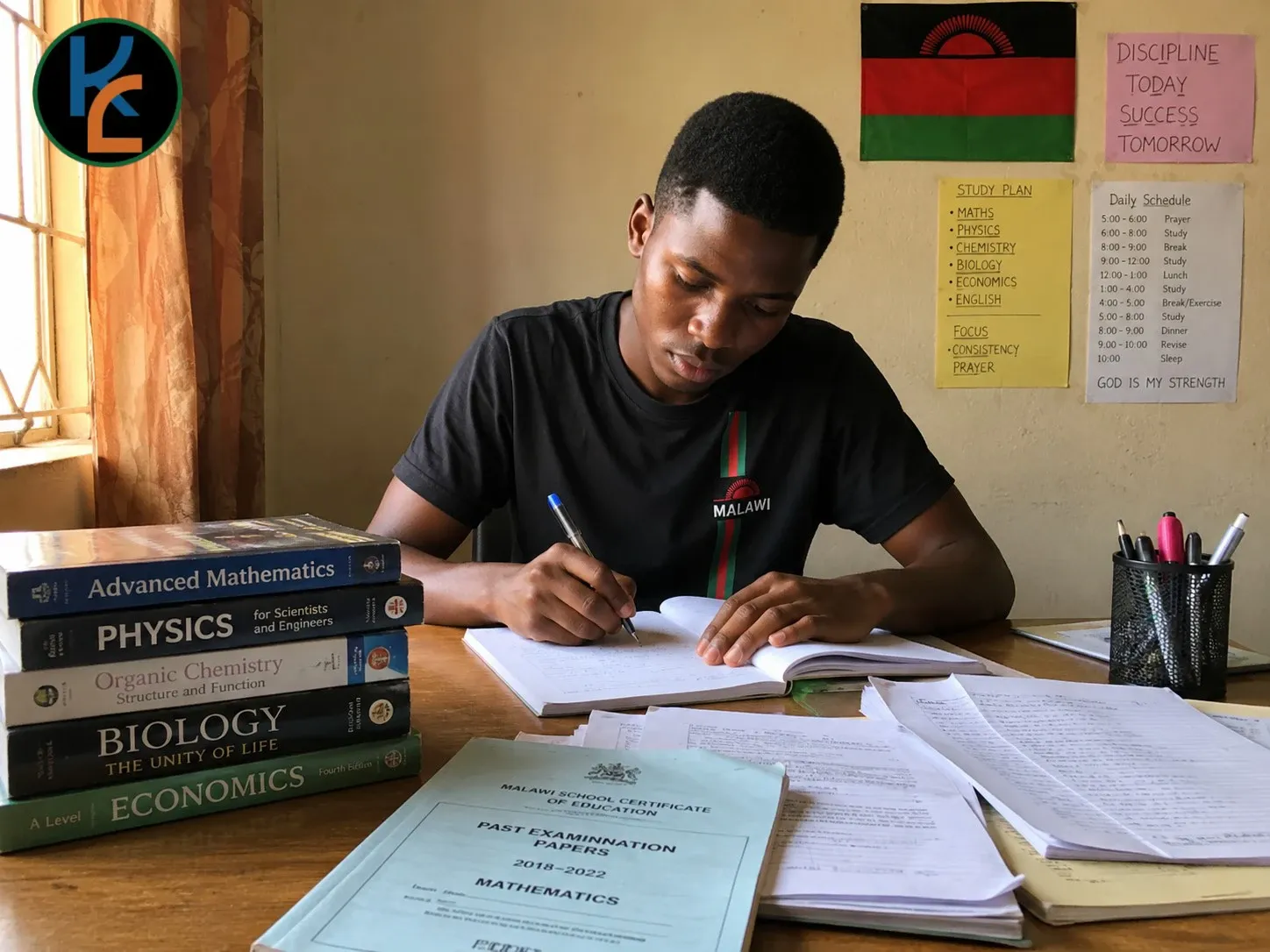
Great grades don't require great wealth — they require great strategy.
💰 The Truth About Paid Tutoring
Let's be honest: tutoring has become a huge industry in Malawi. Some teachers even hold back material in class to push private lessons. It's frustrating, expensive, and often unnecessary.
When Paid Tutoring Actually Helps:
- ✅ You're failing a specific subject and need personalized attention
- ✅ You learn better with structure and someone holding you accountable
- ✅ You have specific questions that need immediate answers
- ✅ Your school teacher is ineffective or frequently absent
- ✅ You can afford it without financial stress on your family
When Paid Tutoring Is a Waste of Money:
- ❌ You're already passing but want to improve slightly
- ❌ You're doing it because everyone else is (peer pressure)
- ❌ The tutor just re-teaches class material without adding value
- ❌ It's causing financial hardship for your family
- ❌ You're too tired from lessons to do independent study
The Reality Check:
A typical tutoring package costs MWK 15,000-50,000 per subject per term. For a student taking 6 subjects, that's MWK 90,000-300,000 — money many families don't have.
Meanwhile, free resources like past papers, study notes, and online guides can deliver the same (or better) results if used correctly.
📖 How to Use Free Study Notes Effectively
Downloading free notes is easy. Using them effectively is what separates passers from failers. Here's the proven system:
Method 1: Active Recall (The Game-Changer)
What it is: Instead of passively reading notes, you actively test yourself on the material.
How to do it:
- Read a section of your study notes (e.g., "Photosynthesis" in Biology)
- Close the notes
- Write down everything you remember — without looking
- Open the notes and check what you missed
- Repeat until you can recall 90% without looking
Why it works: Your brain strengthens memory through retrieval, not re-reading. This is scientifically proven to be 50% more effective than passive reading.
Method 2: Spaced Repetition (Never Forget Again)
What it is: Reviewing material at increasing intervals to lock it into long-term memory.
The schedule:
- Day 1: Learn the topic
- Day 2: Review (10 minutes)
- Day 7: Review again (5 minutes)
- Day 14: Quick review (3 minutes)
- Day 30: Final review before exam
Why it works: You review just before you're about to forget, strengthening the memory each time.
Method 3: Past Paper Practice (The Ultimate Test)
What it is: Using free past papers to test your knowledge under exam conditions.
How to do it:
- Download a past paper (we have free ones below)
- Set a timer for the actual exam duration
- Complete the paper without notes or help
- Mark it using the marking scheme
- Review every mistake and re-study those topics
- Repeat with another paper
Target: Complete at least 5 years of past papers per subject before your exam.
📊 Real Case Study: How Blessing Passed MSCE with Only Free Resources
Background: Blessing Chikondi, a Form 4 student from Lilongwe, faced a difficult situation in 2023. Her father lost his job, and there was no money for tutoring. Her classmates were attending private lessons costing MWK 20,000 per subject.
Her strategy:
- Downloaded free resources: She spent one weekend downloading all available free past papers and study notes from educational websites
- Created a study schedule: 2 hours every morning before school, 1 hour after lunch, 2 hours in the evening
- Used active recall: Instead of just reading, she tested herself on every topic
- Formed a study group: She gathered 4 classmates who also couldn't afford tutoring. They met every Saturday to discuss difficult topics
- Practiced past papers: She completed 7 years of past papers for each subject
The results:
- English: Grade 2 (Distinction)
- Mathematics: Grade 3 (Credit)
- Biology: Grade 2 (Distinction)
- Chemistry: Grade 3 (Credit)
- Physics: Grade 4 (Credit)
- Chichewa: Grade 1 (Distinction)
Total: "6" score achieved! 🎉
Blessing was admitted to the College of Medicine — without spending a single kwacha on tutoring.
"The secret wasn't expensive lessons," she says. "It was consistency, using the right methods, and never giving up when topics were difficult."
📂 Top 5 Free Resources Every MSCE Student Needs
We've analyzed download data from thousands of Malawian students. These are the most-used, highest-impact free resources:
#1: MSCE Mathematics Past Papers (2019-2024)
Why it's popular: Mathematics is mandatory for most university programs, and practice is the only way to master it.
What's inside: 6 years of real exam papers with marking schemes
How to use: Complete one paper per week, review mistakes immediately
📘 Download Mathematics Past Papers →
#2: Physical Science Revision Notes (Physics & Chemistry)
Why it's popular: Science subjects require understanding concepts, not just memorization.
What's inside: Simplified explanations of complex topics, diagrams, formulas
How to use: Read one topic daily, do the practice questions at the end
🔬 Download Physical Science Notes →
#3: English Language Grammar & Comprehension Guide
Why it's popular: English is mandatory for university, and many students struggle with grammar rules.
What's inside: Grammar rules, comprehension strategies, essay writing templates
How to use: Practice one grammar rule daily, write one essay per week
📗 Download English Revision Guide →
#4: Biology Diagrams & Definitions
Why it's popular: Biology requires memorizing many diagrams and technical terms.
What's inside: Labeled diagrams, key definitions, mnemonics for remembering
How to use: Draw one diagram daily from memory, test yourself on definitions
🧬 Download Biology Study Notes →
#5: Complete MSCE Study Bundle (All Subjects)
Why it's popular: One download gives you everything you need.
What's inside: Past papers, notes, and guides for all MSCE subjects
How to use: Download once, organize by subject, study systematically
📁 Download Complete MSCE Bundle →
👥 Bonus: How to Form a Study Group (Free Accountability)

Studying alone is hard. Studying with friends makes it easier — and more effective. Here's how to create a study group that actually works:
Step 1: Choose the Right People
Look for:
- ✅ Students who are serious about passing (not just socializing)
- ✅ Different strengths (one good at Math, one at English, etc.)
- ✅ Reliable and punctual
- ✅ 4-6 members maximum (any more becomes unmanageable)
Step 2: Set Clear Rules
Establish:
- Meeting schedule: e.g., Every Saturday, 9 AM - 12 PM
- Location: Library, someone's house, or school classroom
- Phone policy: Phones off or in a basket during study time
- Attendance: Must notify group if absent
- Preparation: Everyone must complete assigned work before meeting
Step 3: Structure Your Sessions
Sample 3-hour session:
- 9:00-9:15: Quick review of last week's goals
- 9:15-10:15: Member 1 teaches a topic they're strong in (e.g., Algebra)
- 10:15-10:30: Break
- 10:30-11:30: Member 2 teaches their topic (e.g., Biology diagrams)
- 11:30-12:00: Group practice: Solve past paper questions together
- 12:00-12:15: Set goals for next week, assign teaching topics
Step 4: Hold Each Other Accountable
Weekly check-ins:
- How many past papers did you complete?
- Which topics did you struggle with?
- What's your goal for next week?
Consequences for not meeting goals: The person buys snacks next week or does extra practice questions during the session.
Why Study Groups Work:
- ✅ Teaching others reinforces your own understanding
- ✅ Different perspectives help clarify difficult concepts
- ✅ Accountability keeps you motivated
- ✅ Emotional support during stressful exam periods
- ✅ Completely free
🎯 Your Action Plan
Ready to stop worrying about money and start studying effectively? Here's your plan:
This Week:
- Download free past papers for your 3 weakest subjects
- Create a study schedule using active recall and spaced repetition
- Identify 3-4 classmates to form a study group
This Month:
- Complete 2 past papers per subject (timed, with marking)
- Meet with your study group weekly
- Track your progress in a notebook
Before Exams:
- Complete at least 5 years of past papers per subject
- Review all mistakes and re-study weak topics
- Do final group revision sessions
📥 Start Studying Smart, Not Expensive
Free, high-quality resources for every MSCE subject.
Access Free MSCE Resources
✅ 100% free • No signup required • Works offline
Written for every Malawian student who believes great education shouldn't require great wealth.
— Kizito Chikuni, Educator & Developer



Sign in securely with Google to join the discussion.