
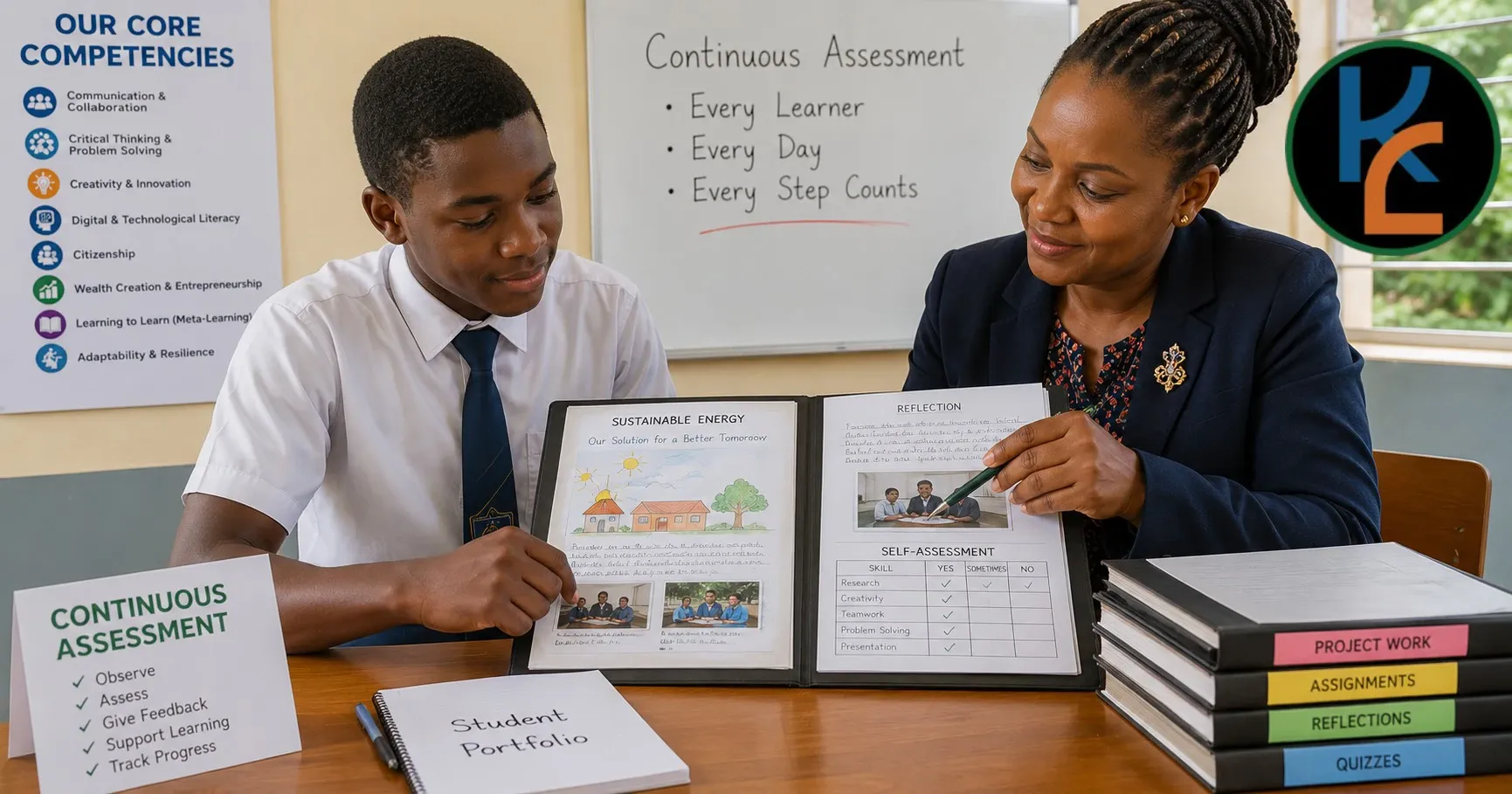
📊 Understanding the New 60/40 Assessment System: How to Ace Continuous Assessment
For decades, Malawian students relied on one big exam to determine their future. That era is officially ending.
Under the new Curriculum and Assessment Framework (July 2025), secondary school assessment is split into:
- 60% Formative Assessment (continuous: projects, presentations, portfolios, classwork, peer reviews)
- 40% Summative Assessment (end-of-term and national exams)
This isn’t just a policy change. It’s a complete shift in how learning is measured. If you understand how to work with this system, you’ll have a massive advantage over students who only study for final exams.

Consistency beats cramming: How the new system rewards steady effort.
🔍 What Exactly Is Formative Assessment?
Formative assessment means ongoing evaluation during the learning process. Instead of waiting until Term 3 to find out you’re struggling, teachers track your progress weekly and give feedback you can act on immediately.
Common formative methods include:
- 📝 Class exercises & quizzes
- 🎤 Oral presentations & debates
- 📁 Project portfolios (collections of your best work)
- 👥 Peer reviews & group feedback
- 🔬 Practical experiments & demonstrations
Unlike exams, formative assessment isn’t about punishment. It’s about course correction. Teachers use it to identify gaps early and adjust their teaching.
📈 How the 60/40 Split Works in Practice
| Assessment Type | Weight | When It Happens | What It Measures |
|---|---|---|---|
| Formative (Continuous) | 60% | Weekly & Termly | Application, collaboration, problem-solving, consistency |
| Summative (Final Exams) | 40% | End of Term/National | Knowledge retention, exam technique, time management |
Key takeaway: Even if you score 90% on your final exam, poor continuous assessment will cap your overall grade. Conversely, strong formative work can protect you if you have an off day during exams.
🛠️ How to Maximize Your 60% Formative Score
1. Build a Learning Portfolio
- Keep a dedicated folder (physical or digital) for your best projects, essays, and presentations
- Label each item with date, topic, and what you learned
- Update it weekly. Teachers use portfolios to track growth over time
2. Treat Classwork Like Mini-Exams
- Show all steps in Maths/Science, not just final answers
- Participate actively in discussions (participation often counts toward formative marks)
- Submit drafts early to get feedback before final submission
3. Master Peer Review & Collaboration
- When reviewing classmates’ work, be specific: “Your introduction is strong, but add more data in paragraph 2”
- Accept feedback without defensiveness. Use it to improve
- Rotate leadership roles in group projects to show versatility
4. Track Your Own Progress
Create a simple tracking table:
| Date | Task | Score/Feedback | Action for Next Time |
|---|---|---|---|
| 10/06 | Biology Practical | 82% – Good setup, weak analysis | Practice writing conclusions with data references |
| 14/06 | English Essay | 88% – Strong structure, needs more quotes | Memorize 3 relevant quotes per text |
⚠️ Common Mistakes Students Make
- ❌ Ignoring formative tasks because “they don’t count as much”
- ❌ Waiting until Term 3 to start taking projects seriously
- ❌ Not keeping a portfolio or reflection journal
- ❌ Treating peer feedback as personal criticism instead of improvement data
📅 Your Weekly Formative Assessment Routine
- Monday: Review last week’s feedback, set 2 improvement goals
- Tuesday-Thursday: Complete classwork with full effort, ask for clarification
- Friday: Update portfolio, reflect on what went well/what didn’t
- Weekend: Practice 1 past paper question using new skills
📥 Free Resources to Prepare for Continuous Assessment
Past papers, revision notes, and study planners to keep you ahead.
Access Free Secondary Resources
✅ 100% free • No signup required • Works offline
Written for every Malawian student ready to turn consistency into high grades.
— Kizito Chikuni, Educator & Developer



Sign in securely with Google to join the discussion.