
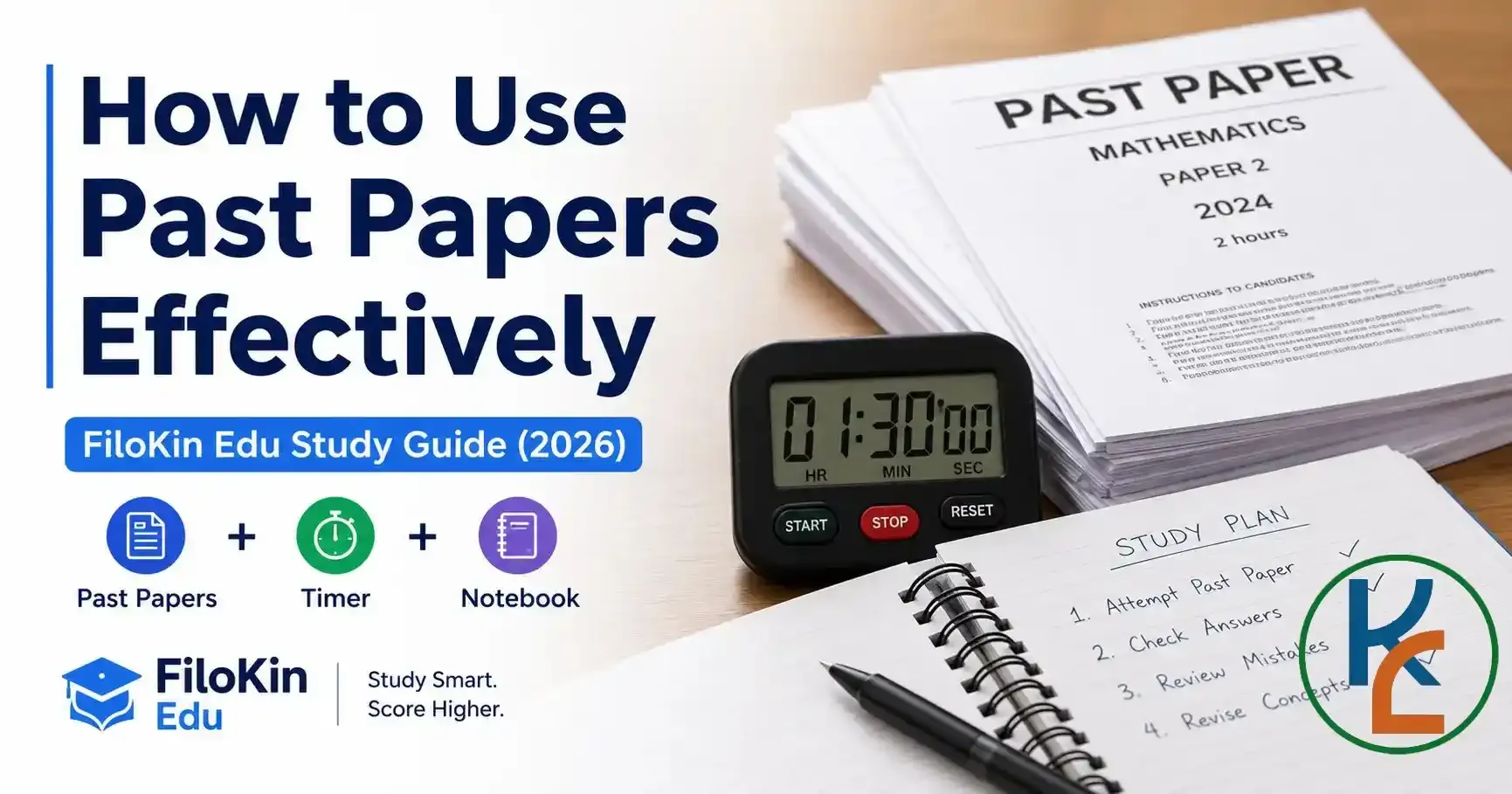
How to Use Past Papers Effectively: A Step-by-Step Study Guide for Malawian Students (2026)
If you've ever sat through an exam thinking, "I studied for weeks, but none of these questions look familiar," you're not alone. Many Malawian students collect dozens of past papers, read through them, and still underperform. The problem isn't the papers—it's how they're used.
In this guide, I'll share a proven, step-by-step method to turn past papers from a passive reading exercise into a powerful exam-prep tool. Whether you're preparing for PSLCE, MSCE, or university entrance exams, this approach will help you study smarter, retain more, and walk into the exam room with confidence.
Why Past Papers Actually Work (The Science Behind It)
Past papers aren't just practice questions. They're a blueprint of what examiners expect. When used correctly, they activate three proven learning mechanisms:
- Active Recall – Testing yourself forces your brain to retrieve information, strengthening neural pathways far more than re-reading notes.
- Exam Familiarity – You learn the format, phrasing, and time pressure before the real day arrives.
- Feedback Loop – Mark schemes show exactly where marks are awarded, so you stop guessing and start targeting.
But here's the catch: reading answers ≠ studying. You need a system.
The 4-Step Past Paper Method
Step 1: Diagnostic Test (Week 1)
Pick one recent past paper for your target subject. Do it under no time pressure, but without looking at your notes. Mark it using the official scheme.
Goal: Identify weak topics, not to score high. Circle every question you got wrong or guessed. These are your priority areas.
Step 2: Targeted Revision (Weeks 2–3)
Go back to your textbooks, class notes, or FiloKin's free resources. Focus only on the topics you missed in Step 1. Create summary sheets, flashcards, or voice notes for these specific areas.
Pro Tip: Don't try to relearn everything. Targeted revision saves ~60% of study time while boosting retention.
Step 3: Timed Practice (Week 4)
Now, do a full past paper under exam conditions:
- Set a timer
- No phone, no notes, no breaks
- Use only a pen and paper
When time is up, stop. Even if you haven't finished.
Step 4: Deep Review & Pattern Recognition
Mark your paper honestly. Then ask:
- Which questions took too long? (Time management issue)
- Which questions were misread? (Reading strategy issue)
- Which topics keep appearing? (High-yield focus area)
Write down 3 actionable changes for your next practice. Repeat this cycle until exam day.
4 Common Past Paper Mistakes (And How to Avoid Them)
| Mistake | Why It Fails | Better Approach |
|---|---|---|
| Reading answers instead of attempting questions | Zero active recall | Always attempt first, check answers after |
| Practicing without timing | Exam day panic | Always use a timer after Week 1 |
| Ignoring mark schemes | Missing how marks are allocated | Study the scheme line-by-line |
| Only doing recent papers | Missing recurring question patterns | Mix 2022–2025 papers for trend analysis |
Free Resources to Get Started
You don't need expensive coaching to practice effectively. FiloKin Edu offers free, curriculum-aligned past papers and marking schemes for:
- ✅ Primary School Leaving Certificate (PSLCE)
- ✅ Malawi School Certificate of Education (MSCE)
- ✅ Subject-specific notes & revision guides
👉 Browse Free Past Papers & Marking Schemes
👉 Download Subject-Specific Study Notes
💡 Tip: Bookmark the marking schemes. They're your cheat sheet for understanding exactly what examiners reward.
Final Thoughts: Consistency Beats Cramming
Past papers won't magically boost your grades if you use them passively. But if you treat them as diagnostic tools, timed practice, and feedback loops, they become the most efficient study method available.
Start with one subject. Follow the 4-step cycle. Track your progress. You'll notice a shift in your confidence, speed, and accuracy within 3–4 weeks.
Need help organizing your study schedule? Drop your exam level and target subjects in the comments below, and I'll share a customized 6-week revision plan.
📌 Stay updated with free study guides, past papers, and exam tips. Subscribe to the FiloKin Edu newsletter for weekly resources delivered straight to your inbox.


Sign in securely with Google to join the discussion.